
The Role of Tarpaulin in Agricultural Fields and Farming

Agriculture has never been a weather-independent business. Farmers have to contend with volatile situations like heavy rain, blistering sun, and excessive winds, which are capable of damaging crops, machinery, and workdays. In order to counter such challenges, farmers resort to commonsense and inexpensive means, and one of the most dependable of them is the Tarpaulin.
From safeguarding harvested crops to shielding machinery, tarpaulins are a familiar figure in agricultural fields around the globe. From covering grain stores with a big tarpaulin or seedlings with a plain tarpaulin sheet, these coverings prove useful in shielding farmers' resources, minimizing losses, and enhancing efficiency.
Saving Crops from Rain and Sun
Weather is the largest contributor to agricultural success. Too much rain can spoil stored crops, and direct sunlight can wither or bruise delicate produce. Providing harvested crops with a waterproof tarpaulin guarantees protection from unexpected rainfall. Grains, hay, or just-harvested produce are usually covered with tarpaulins by farmers to avoid moisture damage.
In the same way, when crops require shading, tarpaulin sheets are fast and effective shades. This is particularly valuable in shielding vegetables, fruits, or seedlings from intense sunlight, avoiding heat stress and enhancing yield quality.
Storage of Harvested Crops
Storage is perhaps one of the most critical applications of tarpaulins in agriculture. Farmers do not usually have permanent storage structures, particularly where they are rural based. Under such circumstances, tarpaulins offer a pragmatic option for temporary but effective cover.
A big tarpaulin can be laid over grain piles in open fields to prevent moisture, dust, and bird damage. Waterproof tarpaulins can be used to prolong the shelf life of harvested produce and prevent post-harvest losses, which are a priority issue in agriculture.
Protection of Farming Equipment and Machinery
Contemporary agriculture is dependent on a wide range of machinery like tractors, harvesters, and irrigation. Exposure of such machinery to weather conditions may result in rust, mechanical failure, or reduced lifespan. Protection of equipment with a sheet of tarpaulin prevents any of these problems.
Waterproof tarpaulins are particularly useful for equipment that is supposed to remain outdoors, being shielded against rain and dew. Through investing in cheap covers, farmers avoid expensive repairs and their machines continue to be in good working condition.
Ground Covers and Drying Surfaces
Yet another significant use of tarpaulins in agriculture is as ground covers. Farmers tend to place tarpaulin sheets on the floor to provide a dry and clean area for drying fruits, seeds, or grains. This has the advantage of avoiding any contact with soil, which can spoil produce or make it rot.
Large tarpaulins are particularly suitable for the construction of temporary drying yards, particularly in rural settings where infrastructure can be lacking. They can be used and reused when farmers relocate them, making them a highly effective resource.
Constructing Temporary Shelters
Tarpaulins can also be employed to construct instant shelters in farm fields. Farm workers could require shade when they work for long periods in the sun, or temporary shelters for livestock and poultry. A big tarpaulin can be strung between poles instantly to form a temporary shed.
In animal husbandry, tarpaulins are used as pens' roof cover, keeping animals safe from both heat and rain. This keeps the livestock healthy and minimizes stress triggered by extreme weather conditions.

Soil and Water Conservation
Apart from crop and equipment protection, Heavy Duty Tarpaulins also play a role in water and soil conservation. Tarpaulin sheets are occasionally used to line irrigation channels or small water reservoir ponds by farmers. The waterproof nature of the tarpaulin acts to prevent seepage, conserving water where it is in short supply.
In the same way, covering soil beds with tarpaulin minimizes erosion during the rainy season and holds on to soil moisture when the weather is dry. This easy method encourages sustainable agriculture while enhancing efficiency.
Transportation of Goods
Another phase where tarpaulins are helpful is transporting farm produce from farms to markets. Freight loaded in vehicles or carts tends to be subject to dust, sunlight, and rain on long trips. By draping the load with a sheet of tarpaulin, farmers can have their products arrive at the market in sound condition.
A big tarpaulin is especially useful in mass transportation of crops such as sugarcane, cotton, or hay. Waterproof coverings ensure that even in a sudden rain, products are dry and unaffected.
Cost-Effective and Long-Lasting Farming Solution
One of the most significant reasons why tarpaulins are extensively used in agriculture is because they are cost-effective. In contrast to the construction of permanent storage sheds or dedicated structures, tarpaulins are cheap, light, and convenient to operate. Farmers are able to cover and uncover spaces easily as required, conserving time and effort.
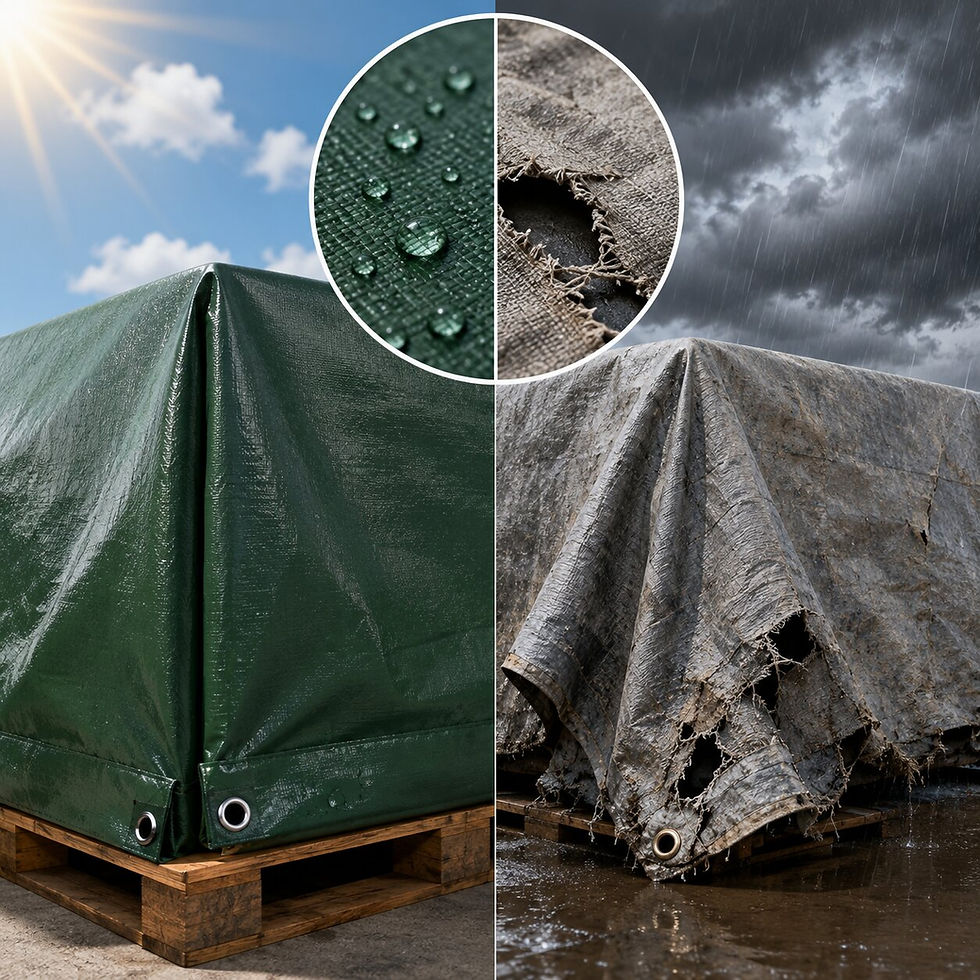
New tarpaulin sheets are designed to be strong and tear-resistant, thus able to support repeated use in harsh farming environments. One investment will last farmers for many seasons, hence a wise long-term measure.
Simple to Handle and Maintain
Farmers frequently work under difficult weather conditions, hence convenience is paramount. Tarpaulins are light, foldable, and hence easy to move around. A big tarpaulin can be lifted by a few individuals, and smaller pieces are easy for lone farmers to handle.
Maintenance is also straightforward; most tarpaulins just need the occasional washing with water to get rid of dirt or crop residues. This minimal maintenance need is also an added attraction in farming activities.
Conclusion
The use of tarpaulins in farming is much more extensive than most people ever appreciate. Used to cover harvested crops and preserve equipment as well as to save water and provide temporary shelter, the multifaceted cover is a farmer's best friend.
Whether employing a basic tarpaulin sheet for floor covering or a tarpaulin for storage in bulk, farmers achieve quality protection at an affordable price. Waterproof tarpaulins keep the crops dry, and tough and durable material comes with years of service. With tarpaulins, farmers can lower losses, enhance efficiency, and protect their living from fluctuating weather.
In today’s world, where farming must balance productivity with affordability, tarpaulins remain a practical and essential solution in agricultural fields everywhere.


Comments